


Hey there! As a supplier of Refrigerated Truck Boxes, I often get asked about the capacity of a typical refrigerated truck box. It's a crucial question, especially for businesses that rely on transporting perishable goods. So, let's dive right in and explore this topic.
First off, what do we mean by capacity? When we talk about the capacity of a refrigerated truck box, we're usually referring to two main things: the volume and the payload. The volume tells us how much space is inside the box, while the payload indicates how much weight the truck can carry.
Volume Capacity
The volume of a refrigerated truck box can vary widely depending on its size and design. Smaller refrigerated trucks, like those used for local deliveries of small quantities of goods, might have a volume ranging from around 100 to 300 cubic feet. These are great for businesses that need to make frequent stops in urban areas, such as flower shops or small bakeries.
On the other hand, larger semi - trailer refrigerated trucks can have volumes that go up to 2,000 cubic feet or more. These big rigs are used for long - haul transportation of large quantities of perishable items, like fruits, vegetables, and dairy products. They're often seen on highways, traveling across states or even countries.
The shape of the truck box also affects the usable volume. Some boxes are designed with a more rectangular shape, which maximizes the amount of space available for stacking goods. Others might have a more aerodynamic shape to reduce fuel consumption, but this can sometimes lead to a slightly lower usable volume.
Payload Capacity
Payload capacity is just as important as volume. It's all about how much weight the truck can safely carry. A typical small refrigerated truck might have a payload capacity of around 2,000 to 5,000 pounds. This includes the weight of the goods, as well as any packaging materials.
Larger trucks, however, can handle much more. Some heavy - duty semi - trailer refrigerated trucks can have a payload capacity of up to 40,000 pounds or more. But it's not just about the size of the truck. The payload capacity also depends on the truck's suspension, axle ratings, and the strength of its frame.
It's important to note that the payload capacity is affected by the weight of the refrigeration unit itself. These units can be quite heavy, especially the more powerful ones used in larger trucks. So, when calculating the payload, you need to subtract the weight of the refrigeration system from the total capacity of the truck.
Factors Affecting Capacity
There are several factors that can affect the capacity of a refrigerated truck box. One of the most significant is the insulation. High - quality insulation is essential for maintaining the right temperature inside the box, but it also takes up some space. A well - insulated box might have a slightly lower volume compared to a less - insulated one, but it will be more energy - efficient and better at keeping the goods fresh.

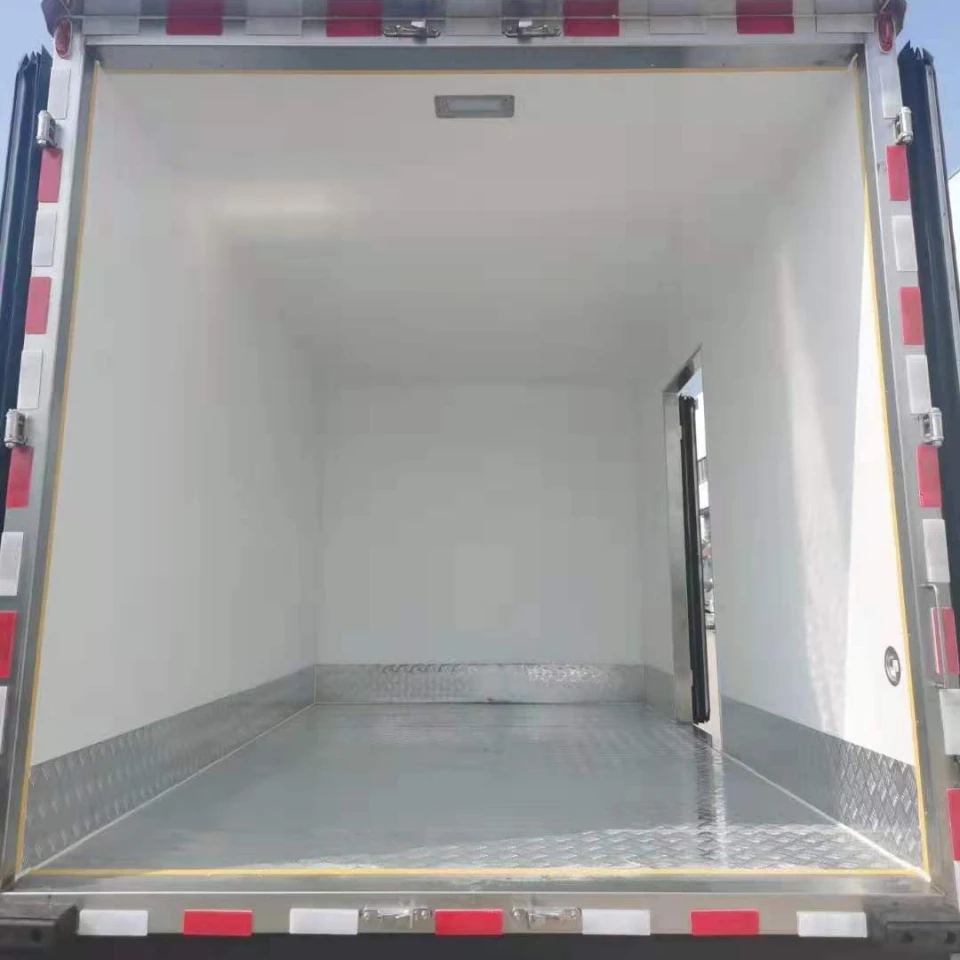
The type of goods being transported also matters. Some products, like liquids or bulk items, can be packed more densely than others. For example, a truck carrying milk cartons can make better use of the available space compared to a truck carrying large, irregularly - shaped items.
The layout of the interior of the truck box can also impact capacity. Some boxes are equipped with shelves, racks, or partitions, which can help organize the goods and make the most of the available space. However, these features can also reduce the overall volume if not designed properly.
Our Products and Their Capacities
At our company, we offer a wide range of refrigerated truck boxes to meet different needs. Our PU Refrigerated Truck Box is a popular choice. It comes in various sizes, with volumes ranging from 150 to 1,500 cubic feet. The payload capacity of these boxes can go from 3,000 to 30,000 pounds, depending on the size and the specific configuration.
We also provide CKD kits Refrigerated Truck Body. These kits are great for customers who want to assemble the truck box themselves or have specific customization requirements. The capacity of the truck boxes built from these kits can be adjusted according to the customer's needs.
Our Insulated Truck Body is another option. It offers excellent insulation properties, which helps maintain a stable temperature inside the box. The volume and payload capacity of these bodies are designed to be competitive in the market, ensuring that you can transport your goods efficiently.
Making the Right Choice
When choosing a refrigerated truck box, it's important to consider your specific needs. If you're a small business making local deliveries, a smaller truck with a lower capacity might be sufficient. But if you're involved in large - scale distribution, you'll need a bigger truck with a higher capacity.
You also need to think about the future growth of your business. If you expect your delivery volume to increase in the coming years, it might be a good idea to invest in a truck with a slightly higher capacity than you currently need.
Contact Us for Your Refrigerated Truck Box Needs
If you're in the market for a refrigerated truck box, we'd love to help. Our team of experts can assist you in choosing the right box based on your capacity requirements, budget, and other factors. Whether you need a small box for local deliveries or a large one for long - haul transportation, we have the solutions.
Don't hesitate to reach out to us for more information or to start a discussion about your specific needs. We're here to make sure you get the best refrigerated truck box for your business.
References
- "Transport Refrigeration Handbook" by the International Institute of Refrigeration
- Various industry reports on refrigerated transportation


