Ice cream is one of the most temperature-sensitive products in the cold chain. A fluctuation of just 2°C during transport can cause ice crystal growth, texture degradation, and shelf-life reduction - turning premium product into unsellable inventory. Designing a truck body specifically for ice cream transport requires understanding deep-freeze thermal dynamics, operational workflows, and regulatory requirements. This guide covers everything you need to know.
1. Temperature Requirements: The -25°C Standard
Different frozen products have different temperature thresholds, but ice cream is uniquely demanding:
| Product | Storage Temp | Max Temp Fluctuation | Consequence of Temp Abuse |
|---|---|---|---|
| Hard ice cream | -25°C to -20°C | ±2°C | Coarse ice crystals, sandy texture |
| Soft serve mix | -18°C to -15°C | ±2°C | Separation, bacterial growth risk |
| Gelato | -20°C to -18°C | ±1°C | Texture collapse, flavor loss |
| Frozen novelties (popsicles) | -22°C to -18°C | ±3°C | Shape distortion, stickiness |
To maintain -25°C in an ambient of 40°C (common in summer ice cream season), the truck body must handle a 65°C temperature differential. This is significantly more demanding than standard frozen transport (-18°C / 25°C delta = 43°C).
2. Insulation Specifications for Ice Cream Bodies
Panel Thickness
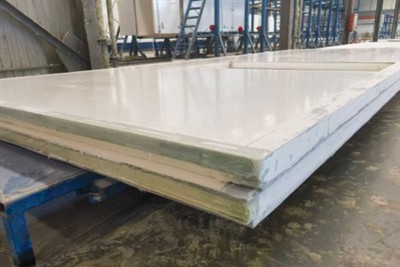
For ice cream transport, 100mm minimum panel thickness is non-negotiable. In tropical climates, 120mm is recommended. Thinner panels will require the refrigeration unit to run continuously at maximum capacity, leading to:
50%+ higher fuel consumption
Compressor failure within 2-3 years (vs 5-7 year normal life)
Inability to recover temperature after door openings
Insulation Material
PU (polyurethane) is the only viable choice for ice cream truck bodies. Its K-value of 0.022 W/m·K provides the thermal performance needed for deep-freeze applications. XPS (0.028 W/m·K) simply cannot maintain -25°C efficiently.
→ See our PU refrigerated truck body panels
Panel Construction
For ice cream bodies, we recommend FRP-skinned PU panels:
Outer skin: 1.5mm FRP (white, UV-resistant) - reflects solar heat
Core: 100-120mm PU foam (density 40+ kg/m³)
Inner skin: 1.2mm FRP or stainless steel (food-grade)
Joint system: Tongue-and-groove with PU adhesive bonding
→ Learn about FRP panel options
3. Refrigeration Unit Sizing
The refrigeration unit must be oversized for ice cream transport to handle:
Pull-down time: Recovery after door openings (5-10 minutes target)
Solar load: Summer sun on dark truck bodies adds 1-2 kW heat load
Product load: Warm product loading (if loading from non-frozen dock)
| Body Length | 3-4m | 4-6m | 6-8m | 8m+ |
|---|---|---|---|---|
| Refrigeration Capacity (at -25°C/40°C) | 3,000-4,000 W | 5,000-7,000 W | 8,000-10,000 W | 12,000+ W |
| Recommended Unit Type | Direct drive | Direct drive or diesel | Diesel | Diesel dual-zone |
4. Door System Design
Doors are where ice cream trucks lose the most cold air. Every door opening at -25°C releases approximately 0.5-1.0 kWh of cooling energy in 60 seconds.
Recommended Door Configuration
Rear doors: Double swing doors with double-lip silicone seals
Side door (optional): Single leaf for curbside vending access
Strip curtains: PVC strip curtains (minimum 3 layers) on all doors
Air door (optional): Powered air curtain for high-traffic vending operations
Door lock: Heavy-duty stainless steel lockable latches
For vending-style ice cream trucks (serving directly from the truck), a serving hatch with a sliding glass window can be installed on the side wall, insulated with double-glazed tempered glass.
5. Interior Layout and Features
5.1 Flooring
Ice cream truck floors must handle heavy freezers, display cases, and foot traffic. Specify:
Aluminum T-bar floor - provides air circulation under cargo, prevents direct contact condensation
Anti-slip surface - critical for safety when frost accumulates
Load rating: Minimum 500 kg/m² for display equipment
5.2 Interior Lighting
Bright LED lighting is essential for vending operations:
Waterproof LED strip lights (IP65+) along both side walls
Color temperature: 5000-6000K (cool white, makes products look fresh)
Battery backup lighting for when engine is off
5.3 Shelving and Mounting
Stainless steel adjustable shelving tracks on side walls
Reinforced mounting points for freezer cabinets (up to 200kg each)
Recessed tie-down rings for securing cargo during transport
6. CBU vs CKD for Ice Cream Trucks
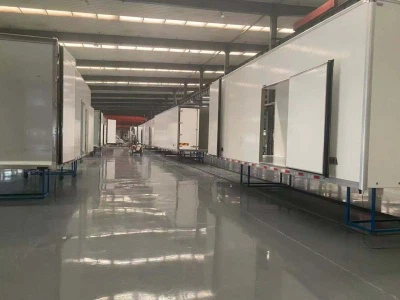
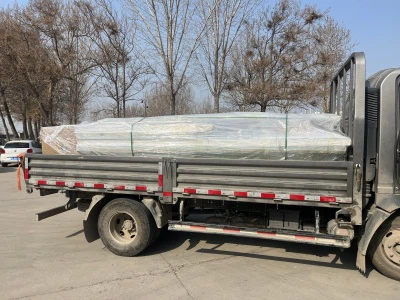
Ice cream truck bodies are available in both CBU (Completely Built Up) and CKD (Knock Down) formats:
| Factor | CBU Ice Cream Body | CKD Ice Cream Body |
|---|---|---|
| Assembly Quality | Factory-controlled, guaranteed | Depends on local assembly |
| Shipping Cost | High (30+ m³ per unit) | Low (8-10 m³ per unit) |
| Delivery Time | Faster (ready to mount) | +1 day for assembly |
| Best For | 1-2 units, urgent deployment | 3+ units, budget-conscious |
→ See our CBU ice cream truck body product page
7. Seasonal Considerations
Ice cream demand peaks in summer - exactly when ambient temperatures are highest. Plan for:
Pre-cooling: Cool the empty body to -25°C for 30+ minutes before loading
Product loading temp: Verify product is at -25°C when loaded - don't load warm product
Door discipline: Train drivers to minimize door open time; use strip curtains
Route planning: Avoid midday heat for long-haul routes where possible
Backup power: Shore power connection for overnight parking at depots
FAQ
What temperature does an ice cream truck body need to maintain?
Ice cream requires storage at -25°C to -18°C to prevent crystal formation and maintain texture. The truck body must maintain this temperature range even in ambient conditions of 40°C, requiring a temperature differential of up to 65°C. This necessitates 100-120mm thick PU insulation panels with a K-value of 0.022 W/m·K or lower.
What is the best insulation for ice cream truck bodies?
PU (polyurethane) insulation is the best choice for ice cream truck bodies due to its low thermal conductivity (0.022 W/m·K). Panel thickness should be at least 100mm. FRP (fiberglass reinforced plastic) skins are recommended for moisture resistance and easy cleaning.
How much does an ice cream truck body cost?
A new ice cream truck body from a Chinese manufacturer typically ranges from $7,000 to $15,000 depending on size, insulation thickness, and door configuration. CBU (fully built) units cost more in shipping, while CKD (knock-down) kits save 40%+ on freight. Contact manufacturers for detailed quotes.
Conclusion
Designing an ice cream truck body is a specialized engineering challenge that demands deep-freeze insulation, oversized refrigeration, and thoughtful interior layout. The investment in quality - 100mm+ PU panels, FRP skins, proper door systems - pays for itself through reduced product loss, lower fuel consumption, and longer equipment life.
TS Brothers has manufactured ice cream truck bodies for clients across Asia, Africa, and South America. We offer both CBU and CKD options, with customization for vending operations, multi-temperature zones, and brand-specific interior layouts. Contact us to discuss your ice cream truck body requirements.